
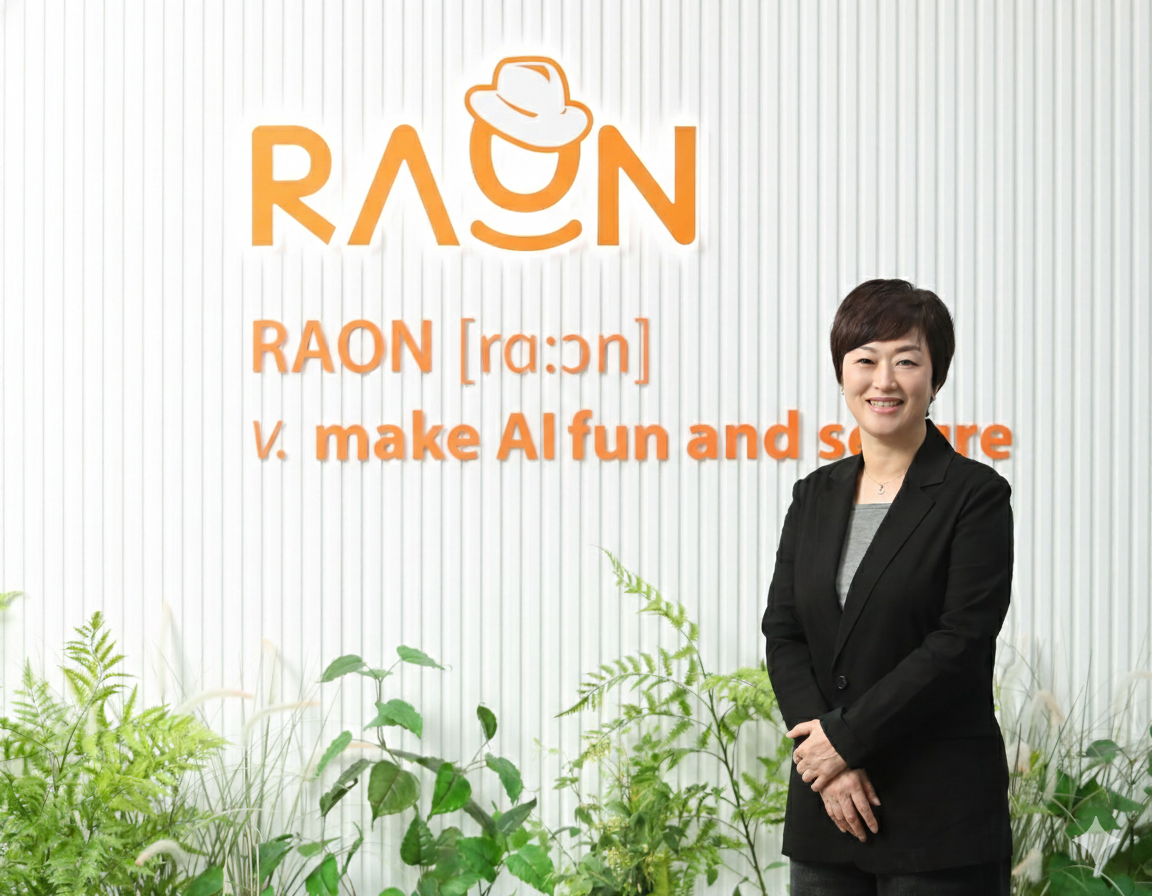
CEO Lee Junga: “Expanding Our Presence Across Telecommunications, Commerce, Manufacturing, and Healthcare Based on Public and Financial Sector Foundations”
RaonSecure’s CEO Lee Junga said in a New Year interview with ZDNet Korea on the 7th, “This year’s management goal can be summarized as leading the global standard for digital trust infrastructure. We already have core strategies in place to achieve this vision.”
She emphasized that the most important focus is expanding user-centric security experiences. “Security is no longer an issue limited to corporate IT departments. It is evolving into a service that individuals experience in their daily lives. DID-based services that allow users to manage mobile IDs, digital student and employee IDs, certificates, and credentials in a single digital wallet provide convenience for individuals while simultaneously delivering trust to companies and governments,” Lee explained.
Noting that it has become difficult to talk about everyday life without AI, Lee stated, “Our goal this year is to embed AI across all RaonSecure services so that AI can detect and respond to threats, while AI agents manage systems on behalf of corporate administrators. In addition, we plan to expand the application of these services across industries including finance, healthcare, education, public services, and national defense, further establishing RaonSecure as a core infrastructure provider that connects individuals, enterprises, and governments within a trusted digital ecosystem.”
She also highlighted the company’s strategy to accelerate market expansion in line with government policies. “If last year was about setting directions, this year will be the time when companies and institutions begin to move faster. We are transitioning from the stage of ‘reading guidelines’ to the stage of ‘changing systems,’” she said. Lee added that RaonSecure already possesses proven technologies and strong references, noting, “We aim to become the fastest and most reliable partner for customers as they translate policy requirements into operational systems. Our focus is on bridging the gap between policy announcements and on-site implementation.”
RaonSecure also plans to accelerate its global expansion this year. Building on its track record in Asia, the company intends to expand into Latin America, the Middle East, and Europe, while actively securing technological leadership through participation in international standardization efforts and its board activities within the FIDO Alliance.
“By actively participating in national-level digital ID projects aligned with government digital transformation policies worldwide, we aim to move beyond ‘technology exports’ to the next stage of ‘standard exports,’” Lee emphasized.
RaonSecure is a specialized IT security and authentication platform company founded on October 2, 2012, by Chairman Lee Soon-hyung. The company provides a wide range of security solutions to financial institutions, public sector organizations, and enterprises. RaonSecure was the world’s first company to obtain global FIDO (Fast Identity Online), an authentication standard that verifies user identity using biometrics and security keys instead of passwords. It is also an active board member of the global FIDO Alliance alongside major global technology companies.
CEO Lee Junga joined RaonSecure as Vice President in 2013 and was promoted to Co-CEO at the president level in January 2024. She majored in Computer Science at Sungkyunkwan University and earned a master’s degree in Business Administration from Yonsei University. With more than 30 years of experience in the security industry, Lee began her career at LG Information & Communications, and later worked at Fujitsu Korea and SoftForum before joining RaonSecure. In 2021, she received the Presidential Commendation for Contributions to Information Security. Below is a Q&A interview with RaonSecure CEO Lee Junga.
Q. How do you foresee the security market in 2026?
“The security market this year is expected to shift its paradigm from ‘post-incident response’ to ‘proactive investment.’ Following a series of major security incidents last year, penalties, lawsuits, and reputational damage are now putting direct pressure on corporate survival. Security is no longer optional — it has become a critical investment for business continuity.
From a keyword perspective, rather than the emergence of entirely new trends, what we are seeing is the direction RaonSecure has consistently focused on — access control and digital authentication — becoming the industry-wide standard. First and foremost, the mandatory adoption of biometric-based multi-factor authentication (MFA) is essential. Traditional passwords are vulnerable to leakage, reuse, and phishing attacks, and in the global security industry, ‘passwordless’ is no longer a slogan but a reality.
FIDO-based MFA verifies biometric data only within secure device environments and protects authentication keys through a distributed architecture, effectively eliminating the ‘central password’ that attackers typically target. It is emerging as a core technology that simultaneously reduces insider threats and external cyberattacks.
The full-scale expansion of Zero Trust is also a key development. The government’s announcement of Zero Trust Guideline 2.0 marks a turning point for the market. Instead of granting trust through a single login, continuous verification of users, devices, and access privileges will become the standard. In particular, as generative AI makes phishing and impersonation more sophisticated, organizations are now being required to go beyond verifying ‘valid accounts’ to confirming whether the access entity is a real human — a concept known as ‘Proof of Humanity.’ In high-impact environments such as finance, public services, and national defense, multi-layered verification combining biometric authentication, device trust, and anomaly detection will become increasingly widespread.
Data sovereignty and decentralized identity (DID) are also areas to watch closely. Centralized identity management poses significant risks in the event of breaches. DID enables individuals to control their own identity data, reducing the risk of single points of failure (SPoF). In the AI era, data is a core national asset, and distributed authentication and FIDO provide practical solutions for proactive protection.
AI-based threat detection and automated response will also establish themselves as core trends. As automated attacks disguised as legitimate users increase, real-time behavioral analysis, automatic anomaly blocking, and AI-driven intelligent defense systems are becoming essential. RaonSecure is responding to these advanced threats by enhancing AI security technologies, including deepfake detection, homomorphic encryption-based AI facial recognition, and AI-powered malicious app and smishing detection.”
Q. Which security markets will be your key focus this year?
“We will continue to prioritize the financial and public sectors as our core markets, while expanding our business scope into various industries such as platforms (e-commerce and telecommunications), manufacturing, and healthcare, based on our proven track record and references.
The financial sector is a high-risk domain where not only personal data but also asset information is concentrated. The need for Zero Trust and MFA is particularly clear in this area. With the rapid expansion of non-face-to-face financial services and open banking environments, the adoption of FIDO-based biometric authentication and passkeys is accelerating. RaonSecure has already established strong partnerships with major domestic financial institutions.
Platforms such as e-commerce and telecommunications have experienced security incidents over the past year, making them acutely aware of the urgency of managing insider risks. Given the large volumes of customer data they handle, a single breach can threaten corporate survival, and these sectors are expected to be among the fastest to shift toward proactive security investments.
The healthcare sector also requires preemptive responses to future threats, including the goal of a full transition to post-quantum cryptography (PQC) by 2028. As healthcare data is highly sensitive and remote medical services continue to expand, the importance of authentication and access control is growing rapidly.
Currently, we are working closely with leading large-scale customers across major domestic financial institutions, public sector organizations, and platform companies.
As we expand into Southeast Asia, Japan, and Latin America, RaonSecure’s technological capabilities are gaining increasing attention worldwide, driven by the growing global demand for digital trust infrastructure.”
Q. Which products will be your key focus this year, and what are their competitive strengths? Please also share details on new or upgraded products planned for release this year.
“Last year, we demonstrated the competitiveness of our authentication and access management platforms from a Zero Trust perspective. Our FIDO-based multi-factor authentication (MFA) platform OnePass, integrated device management solution OneGuard, cloud-based unified account management service OmniOne Access, and integrated identity and access management platform TouchEn WiseAccess connect the entire security workflow — from identity verification to access control and privilege operations — into a single, seamless framework.
This year, we are preparing a strategic expansion centered on the convergence of ‘MFA–Access Management–DID–AI·Web3,’ with the goal of launching new services within the year.
First, we are accelerating the transition to MFA and passwordless authentication. By adopting FIDO-based decentralized authentication, we prevent authentication data from being centralized, effectively blocking both insider threats and external hacking attempts. By lowering the barriers to passkey adoption, we aim to provide a consistent authentication experience across cloud, hybrid, and mobile environments.
Second, we are enhancing the integrated operation level of Identity and Access Management (IAM). Our platform enables transparent control over “who accesses what, with which privileges, and where,” while systematizing not only account and privilege provisioning but also the enforcement of access policies. Adaptive authentication based on login location, access patterns, and device status, combined with automated policy management, significantly improves operational efficiency.
We are also strengthening the integration of DID, AI, and Web3 technologies. Through the OmniOne Digital Wallet, we enable a decentralized architecture in which individuals directly manage their own identity data. From government-issued IDs to certificates and credentials, users can manage all digital identities in a single wallet, reducing dependence on centralized servers and further enhancing data protection.
AI is being applied to analyze access patterns, detect anomalies, automate policy enforcement, and identify advanced threats such as deepfakes and smishing attacks. In particular, we plan to launch products featuring AI-powered security agents that improve enterprise infrastructure and account management efficiency, while minimizing the impact of large-scale cyber threats.
In addition, through integration with Web3 and blockchain technologies, we will strengthen the transparency and scalability of our trust framework by applying post-quantum cryptography (PQC) and zero-knowledge proof (ZKP) technologies.”
Q. AI-powered hacker attacks are expected to intensify this year. How are you responding?
“The key characteristic of AI-driven attacks is the automation and large-scale replication of behavior that appears to be ‘legitimate user activity.’ Phishing messages have become more natural and convincing, while deepfake-based voice phishing and video manipulation have reached a level that is difficult to distinguish with the naked eye. RaonSecure has been conducting in-depth research in this area and has strengthened its response strategies for 2026, gradually applying related technologies across its solutions and services.
First, AI serves as a ‘decision engine’ within the Zero Trust framework. RaonSecure analyzes multiple signals in real time — including login location, access patterns, and device status — to calculate risk levels. Based on these results, the company implements risk-based authentication that dynamically reinforces authentication requirements or blocks access when necessary.

Chairman Lee Soon-hyung of RaonSecure delivering a presentation at a company-hosted event last year.
In addition, by applying AI-driven security automation, RaonSecure automates the entire process from threat detection and policy enforcement to access blocking. This minimizes administrator intervention and enables a faster, more precise Zero Trust operational environment.”
Recently, attempts to bypass authentication using deepfakes and deep voice technologies powered by generative AI have been increasing. As a result, the core focus of authentication is shifting from “authentication methods” to verifying whether the subject being authenticated is an actual human — a concept known as Proof of Humanity. RaonSecure has developed and commercialized AI-generated content detection technologies, including deepfake and deep voice detection, further strengthening identity verification reliability within Zero Trust environments.
The company is also focusing on advancing AI-based threat detection technologies. It first commercialized generative AI-based deepfake detection through its consumer mobile antivirus product to validate technical reliability. Building on this foundation, RaonSecure is expanding deep voice detection and real-time video and voice call detection capabilities for enterprise and institutional environments. Furthermore, AI-based malicious app and smishing detection technologies are being integrated with security monitoring and authentication systems to enhance real-world threat response effectiveness for both enterprises and public sector organizations.
Lastly, RaonSecure operates a proactive defense framework powered by its in-house white-hat hacker team. The company analyzes the latest attack techniques — including AI-driven phishing, deepfakes, and account takeover attempts — from an attacker’s perspective through simulated offensive testing. Identified vulnerabilities and attack patterns are rapidly incorporated into authentication, detection, and response technologies, strengthening preemptive defense capabilities before threats can spread.
“AI-driven threats cannot be stopped by a single technology alone. What is required is an organically connected, integrated security framework. Through our Zero Trust platform that connects authentication, detection, control, and response into a unified flow, combined with AI security technologies, RaonSecure is proactively responding to the evolving threat landscape.”
Q. Please share your current overseas expansion status and your market strategy for this year.
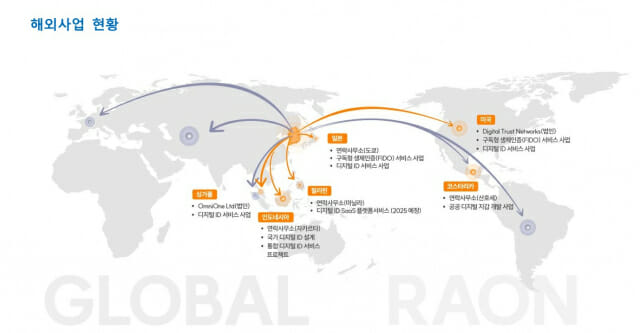
“Our overseas expansion is delivering tangible results in two key areas: securing real-world deployment references and advancing technology standardization. In Japan, our FIDO-based biometric authentication service OnePass is approaching 10 million monthly active users (MAU), reaching 9.6 million as of the end of last year. This serves as strong evidence of the stability and reliability of our technology in large-scale, real-world environments.
Building on this experience, we are continuing to expand global use cases by participating in national-level digital ID projects in countries such as Costa Rica and Indonesia, based on OmniOne Open DID. At the same time, as a board member of the FIDO Alliance, we are contributing to the advancement of global authentication standards, strengthening both technological alignment and competitiveness throughout the market formation process.
This year’s overseas market strategy will focus on three major directions.
First, accelerating the global expansion of DID. As digital transformation progresses rapidly worldwide, demand for national identity authentication infrastructure is growing across many regions. We will further strengthen cooperation with local governments and partners to establish RaonSecure’s DID technology and FIDO-based authentication platforms as standard solutions in multiple countries.
Second, expanding our presence in the Japanese market. Building on the expected milestone of surpassing 10 million MAU this year, we plan to extend our services into adjacent sectors such as finance and education, while accelerating the adoption of Zero Trust solutions. In addition, as digital transformation gains momentum in Japan, we will reinforce collaboration with local partners to lay a strong foundation in the digital identity and digital credential markets.
Third, establishing a foothold in North America and Europe. These markets have the most stringent security requirements and the highest technological standards. Through our activities within the FIDO Alliance and global partnerships, we aim to demonstrate our technological capabilities and gradually secure reference projects in these regions.
The core of our overseas expansion strategy lies in ‘technology excellence’ and ‘standardization.’ Beyond product development, we are actively participating in the creation of global standards to secure leadership from the early stages of market formation.”
Q. Is there a key goal you are determined to achieve this year at the management level? And what about your personal goals?
“From a management perspective, our top priority is to enhance the quality of Zero Trust reference projects across the public sector, financial institutions, and large enterprises. RaonSecure has already built its platform around five core pillars — identity verification, device authentication, behavioral analysis, security integration, and AI-driven automation. Beyond simply increasing deployment numbers, we aim to help customers clearly measure the real impact of Zero Trust transformation through operational performance indicators and achieve tangible security improvements.
To accomplish this, we are focused on accumulating representative use cases that successfully embed key Zero Trust initiatives — such as insider risk control, passwordless adoption, and advanced integrated authentication and access management — into real operational environments. Our ultimate goal is to firmly establish the market perception that ‘Zero Trust means RaonSecure.’
On a personal level, I aim to expand the social value of digital trust infrastructure. Last year’s major security incidents once again highlighted that cybersecurity is directly tied to corporate survival and national competitiveness. This year, I plan to continuously communicate the importance of ‘trust’ to business leaders, policymakers, and the general public. Shifting awareness is just as important as technological innovation, and I believe this represents a core social responsibility of a company leading the digital trust infrastructure sector.”
Q. Looking back on 2025, what would you highlight as the three key achievements?
“If we were to summarize last year’s major security developments, it was a year that clearly reaffirmed the importance of ‘Zero Trust’ and ‘digital authentication.’ This was evident in strengthened government policies such as the pan-ministerial Comprehensive Information Security Measures, the National Network Security Framework (N2SF) Security Guideline 1.0, and Zero Trust Guideline 2.0. Amid these changes, 2025 was also a year in which RaonSecure firmly established its identity as a ‘digital trust infrastructure company.’
First, we led the expansion of the Zero Trust security ecosystem. One of RaonSecure’s key strengths is that we possess a full portfolio of core security solutions required to implement Zero Trust architecture in-house. We have continuously advanced our Zero Trust security framework based on five core pillars: identity verification, device control, behavioral analysis, security integration, and AI-driven security automation.
Key solutions for Zero Trust implementation — including the FIDO-based multi-factor authentication (MFA) integrated platform OnePass and the integrated identity and access management platform TouchEn WiseAccess — have been widely adopted across financial institutions, public sector organizations, and enterprise environments, strengthening our market competitiveness. In the same context, we also launched OmniOne Access, a Software-as-a-Service (SaaS) model designed to meet the needs of mid-sized and small businesses.
This cloud-based unified account management platform combines MFA, identity management (IM), and single sign-on (SSO) capabilities into a single solution, significantly improving account management efficiency. It can be deployed quickly at a reasonable cost without requiring additional infrastructure, addressing the needs of mid-sized and small enterprises that face challenges in centralized account management due to limited manpower and budget constraints.”
Last year also reaffirmed the strength of RaonSecure’s white-hat service capabilities. Since 2012, the company has operated its WhiteHat Center, a dedicated ethical hacking organization, to respond to emerging cyber threats in the AI era. By providing proactive security vulnerability assessments and ISMS consulting services, RaonSecure has played a leading role in protecting corporate information assets and personal data, while also achieving solid business growth.
In the global market, RaonSecure expanded the foundation of technology standardization. In Japan, its FIDO-based biometric authentication service OnePass is approaching 10 million monthly active users (MAU). The company has also actively strengthened technology sharing and partnerships with Japanese overseas partners accelerating digital transformation, laying the groundwork for broader adoption of multi-factor authentication solutions in the Japanese market.
Decentralized identity (DID) has also delivered tangible global results. RaonSecure has been expanding its technological footprint across multiple countries, particularly in Southeast Asia and Latin America. Public and private institutions in countries such as Indonesia, the Philippines, and Costa Rica have adopted OmniOne Open DID, the open-source version of OmniOne Digital ID. This marks a clear signal of the accelerating global expansion of K-DID.
Furthermore, RaonSecure is advancing a global digital identity trust framework by linking W3C Verifiable Credentials and international mobile ID standards under the leadership of the International Telecommunication Union (ITU), while incorporating the Open DID trust framework model. As related technologies have already passed the ITU’s preliminary international standard adoption stage, the company plans to accelerate the next phase of real-world implementation and market expansion.
Q. Finally, what recommendations would you offer for building Korea into a global leader in cybersecurity?
“A cultural shift is needed to recognize security not as a ‘cost,’ but as an ‘investment.’ According to data from the Korea Internet & Security Agency (KISA), information security spending accounts for only 6.29% of total IT investment among publicly listed companies in Korea. Last year’s major security incidents clearly demonstrated that post-incident recovery costs far exceed proactive security investments. When penalties, lawsuits, and reputational damage are taken into account, security investment becomes the most cost-effective form of risk management.
The execution capability of government policies must also be strengthened. The policy direction is already clear through initiatives such as Zero Trust Guideline 2.0 and the National Network Security Framework (N2SF) guidelines. What matters now is implementation. Public institutions should take the lead in adoption and create best-practice reference cases that private enterprises can follow.
National-level support for global standardization activities is also essential. Technological development alone is not enough to secure global leadership. Participation in international standardization bodies such as FIDO and W3C DID, as well as the establishment of overseas reference projects, requires long-term investment. With strategic national support, Korea’s cybersecurity industry can further strengthen its global competitiveness.
In the AI era, ‘trust’ is emerging as the most critical competitive asset. Who builds the digital trust infrastructure will determine future competitiveness. Security is not just a technological issue — it is a matter of national and social trust. As a company building digital trust infrastructure, RaonSecure will continue to contribute to the advancement of the information security industry.”
Source: Original interview published by ZDNet Korea (Korea)
Date: January 8, 2026
Title: [2026 주목! 보안기업] 라온시큐어 "디지털신뢰 인프라 글로벌 표준 주도"
Link: https://zdnet.co.kr/view/?no=20260108122625
This content has been translated and edited for informational purposes.
'RAON History' 카테고리의 다른 글
| 24/7 Security That Never Sleeps…AI Replaces Shift Duties (0) | 2026.04.28 |
|---|---|
| [Contribution] Security Principles Must Apply to AI (0) | 2026.04.09 |
| AI Assistants and Robots to Wear “Name Tags”? “Digital IDs Are the Seatbelt of the AI Era” (1) | 2026.01.29 |
| Blockchain-based digital ID for safe and joyful world (0) | 2026.01.12 |
| RaonSecure Leads Blockchain-Based Digital Identity Solutions (0) | 2026.01.12 |


